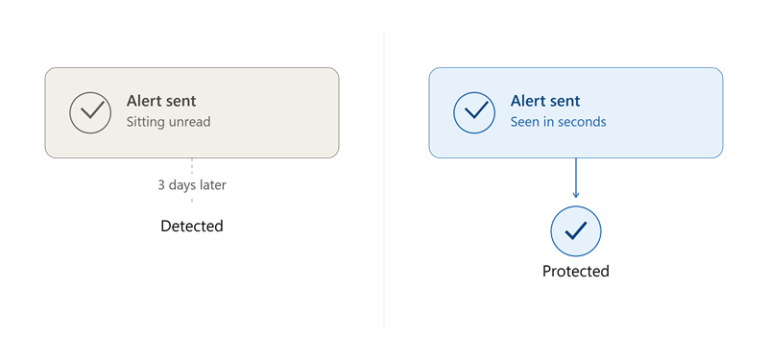
A facility manager we spoke with recently had sensors installed in three mechanical rooms for over a year. Every one of them was working correctly. Every one of them had, at some point, sent an alert email when a reading crossed a threshold. Not one of those alerts had ever been seen by a person in time to do anything about it.
This is a more common story than it should be, and it is worth being precise about why it happens, because the fix is not “buy better sensors.” The sensors were already doing their job correctly.
Buying Sensors Solves a Different Problem Than the One People Think It Solves
When a facility team decides to add monitoring, the problem they are usually trying to solve is “we do not know what is happening in this space.” Sensors solve exactly that problem. A sensor tells you, accurately and continuously, what the temperature, moisture level, or door status actually is.
What a sensor does not solve is the second, separate problem: “someone needs to see this and act on it, including at 2am, on a weekend, during a week when everyone is busy with something else.” That is a staffing and process problem, not a hardware problem, and it is the one that determines whether a monitoring investment actually protects anything.
Where the Gap Actually Shows Up
Alerts go to an inbox nobody checks in real time. Email is not a monitoring system. An alert sitting in an inbox until someone happens to open their email is functionally the same as no alert at all, for anything that needs a response within hours rather than whenever someone next checks messages.
The person who gets the alert cannot act on it. A facility manager who receives a 2am alert about a water leak in a building three hours away cannot personally do anything about it immediately. Without someone who can actually respond physically, the alert produces awareness but not protection. See our related piece on what a work order platform should actually show you for a closer look at what real accountability requires once an alert exists.
Nobody has defined what “urgent” actually means. Not every reading outside normal range needs an immediate response. Without a clear, pre-defined sense of what genuinely warrants waking someone up versus what can wait until morning, alerts either get ignored out of alert fatigue, or every alert becomes a crisis regardless of actual severity.
There is no backup for the person who is supposed to be watching. A single point of responsibility for monitoring is a single point of failure. If the one person who checks the dashboard is on vacation, sick, or simply busy with something else that week, coverage has a gap nobody planned for.
What Actually Closes the Gap
Closing this gap is not primarily a technology upgrade. It requires three things working together: sensors that detect accurately, which is the part most facilities already have, a defined, tiered sense of what severity requires what kind of response, and a person or team whose actual job is to be watching continuously and capable of acting when something fires.
This is the specific gap Kibog Response is built to close. Not better sensors — a real team behind the sensors you already have or are considering, watching continuously and equipped to actually respond, not just forward an alert email to someone else’s inbox.
If your facility has sensors already sending alerts nobody is consistently watching, that is worth a conversation before anything else changes. Talk to our team about what monitored response would actually look like for your specific setup.