
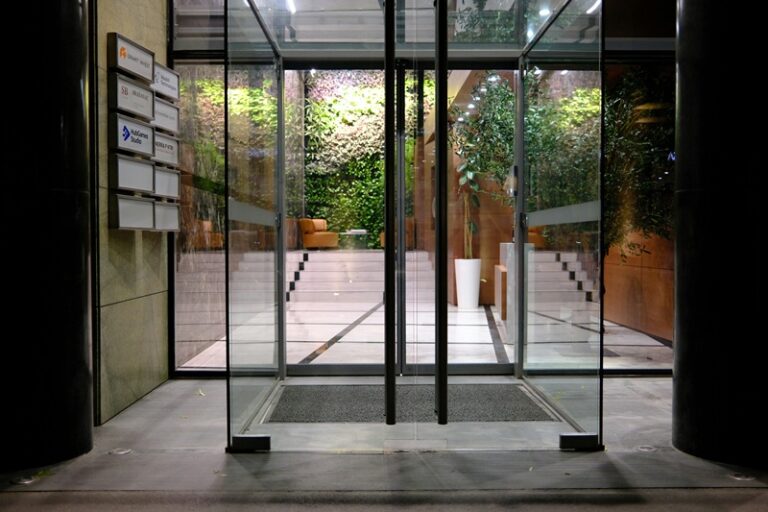
Think about how many times an exterior entrance door or a shipping/receiving door or lobby entryway opens and closes during a single business day. Employees, tenants, delivery drivers, and visitors pass through constantly.
Because commercial doors get heavy physical use, their internal hardware—hydraulic closers, hinges, panic bars, electronic latches, and weather stripping—wears out faster than almost any other building component.
A door that doesn’t latch properly isn’t just a minor annoyance; it is a major security vulnerability, a energy loss point, and an immediate ADA compliance liability.
Investing in routine commercial door maintenance keeps your building secure, energy-efficient, and easy to access for everyone.
Common Signs Your Commercial Doors Need Attention
Door problems usually start small before causing major building disruptions. Keep an eye out for these warning signs:
- Slamming or Slow Closing: If an entry door slams shut with a loud bang, or creeps closed so slowly that it stays propped open, the hydraulic fluid inside the door closer has leaked or lost pressure.
- Dragging on the Frame or Threshold: Sagging hinges or worn continuous pivots cause heavy metal doors to rub against the frame, damaging locks and making the door difficult to pull open.
- Loose or Sticking Panic Hardware: Emergency exit bars that require excessive force to push create serious life-safety hazards during emergency evacuations.
- Drafts and Visible Light Gaps: Worn sweep seals and cracked perimeter weather stripping allow outdoor air, water, and pests to enter your lobby, driving up utility bills.
- Intermittent Electronic Latch Failures: Keycard access readers or automatic push-button operators that fail intermittently cause tenant frustration and security gaps.
Why Door Maintenance Matters for Liability & Compliance
Commercial doors must comply with strict local building codes and the Americans with Disabilities Act (ADA).
If an entrance door requires too many pounds of force to open, or if an automatic door closer shuts too quickly on a visitor using a walker or wheelchair, your property faces real legal exposure.
Routine door checks ensure opening force stays within legal limits, latching speeds are adjusted properly, and emergency exit hardware works effortlessly every single time.
What a Commercial Door Tune-Up Includes
A comprehensive door service visit covers all mechanical and physical components:
- Adjusting hydraulic closing speeds and latching force
- Lubricating heavy-duty hinges, locksets, and panic bars
- Aligning door frames and tightening mounting anchors
- Replacing worn bottom sweeps and perimeter weather seals
- Testing emergency egress hardware and push-button automatic openers
Protecting Your Building’s Main Entry Points
Your entrance doors create the very first impression for tenants and visitors arriving at your property. Keeping hardware adjusted, secure, and functioning smoothly protects your building’s safety and professional appearance.
Through Our Work Order Platform, property managers track every door repair, hardware replacement, and safety check with complete photo-verified records.
Are failing entry doors compromising your facility’s security?
Learn how our multi-trade technicians keep commercial properties running smoothly by visiting our Facility Services Page or getting in touch with our repair team.