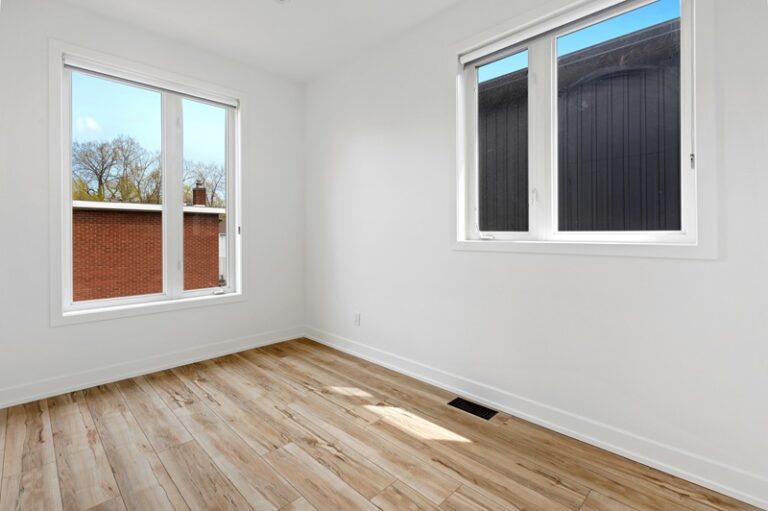
A property management company managing a portfolio of vacant homes had a straightforward but expensive problem: every empty property needed to be physically checked, regularly, to catch issues before they became disasters. A pipe freezing in an unheated basement in January. A door left unsecured after a contractor visit. A slow leak that goes unnoticed until it has soaked through two floors. For a portfolio of any real size, daily visits are not a small cost, they are a recurring drain on staff time that scales with every property added.
This is a real deployment Kibog built and ran, not a hypothetical. It is worth walking through what was actually installed and what changed, because the result is a genuinely useful benchmark for anyone managing unoccupied properties.
What Was Actually Installed
The setup was deliberately simple, built around the specific risks a vacant home actually faces:
Door open and close sensors, monitoring unauthorized entry or unexpected access.
Water detection sensors, several units placed in the basement, the highest-risk area for an undetected leak in a home nobody is walking through daily.
Temperature sensors on every floor, catching an HVAC failure or a freeze risk in a property with no one there to notice a cold snap before it becomes a burst pipe.
Why Cellular, Not WiFi
Every sensor reported to an access point at the property, which sent data back to Kibog’s monitoring system over cellular networks via SIM card, not the property’s own WiFi. This matters more for a vacant home than it might for an occupied building: utilities and internet service at an unoccupied property are often reduced, inconsistent, or turned off entirely, so a monitoring system that depends on the property’s own connectivity is a monitoring system that can silently stop working exactly when you need it most.
What Changed
The property management company was able to reduce in-person visit frequency from daily to weekly. That is not a minor adjustment. For a portfolio of any size, it represents a significant reduction in staff time spent driving between empty properties for checks that, most of the time, confirm nothing has changed.
The detail that makes this genuinely worth documenting: the company’s insurance provider accepted the reduced visit frequency. This was not just an internal operational decision, a third party with a direct financial interest in the property’s risk profile reviewed the monitoring setup and agreed that weekly visits, backed by continuous sensor monitoring, provided adequate coverage. That is a meaningfully different claim than “this made our team’s life easier.” It is a claim that the monitoring itself measurably reduced risk, in a way an insurer was willing to formally recognize.
Where This Applies Beyond Vacant Homes
The same logic extends to any property or space that is not occupied or checked on a constant basis: properties between tenants, seasonal or vacation properties, estate and trust properties awaiting resolution, and new construction sitting unsold or unoccupied. In every case, the underlying problem is the same, something bad can happen in the gap between visits, and the only way to close that gap without physically being there is to have something else watching continuously.
If you manage vacant or intermittently-occupied properties and are curious what a monitoring setup would look like for your specific portfolio, talk to our team. For facilities where something needs to actually happen when a sensor fires, not just an alert nobody sees, see how Kibog Response closes that loop.
Explore more: IoT Solutions