Facility Technology

Wireless sensor with battery compartment open showing replaceable battery

Sensor Battery Life: What Actually Drains It and How Long Kits Really Last

One of the most common practical questions about wireless sensors, and one that gets a frustratingly vague answer from most manufacturers, is simply: how long does the battery actually last. Spec sheets often list an optimistic best-case number that rarely matches reality. Here’s what actually determines real-world battery life, and how to plan maintenance around […]

Sensor Battery Life: What Actually Drains It and How Long Kits Really Last Read More »

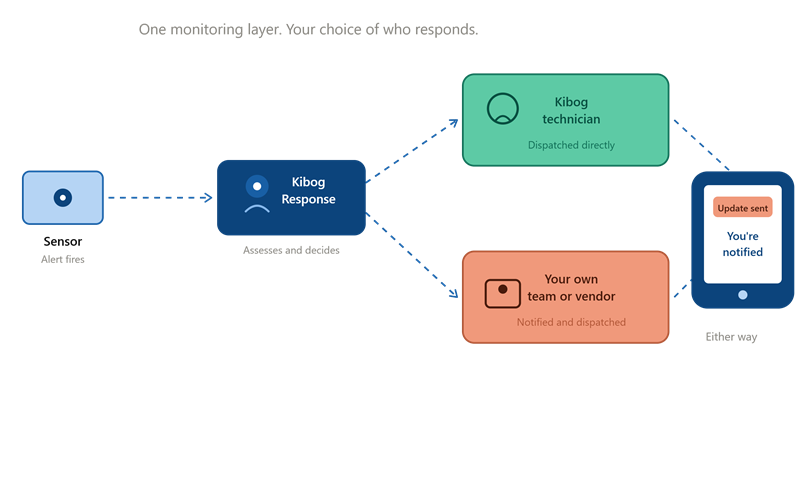
Diagram showing Kibog Response monitoring dispatching to either a Kibog technician or the client's own existing maintenance team

What Happens When Kibog Response and Your Existing Facility Team Work Together

A common hesitation when a facility manager considers Kibog Response: “we already have an internal team and existing vendors, does this mean replacing them?” The honest answer is no, and it’s worth walking through exactly how the two work together in practice, since this comes up in nearly every early conversation. What Kibog Response Actually

What Happens When Kibog Response and Your Existing Facility Team Work Together Read More »

Comparison of sensor installation in an existing retrofit building versus new construction

Retrofit vs. New Construction: Where Sensor Installation Actually Differs

Sensor monitoring gets planned very differently depending on whether it’s going into a building that’s already operating versus one still under construction. The constraints, timing, and even the hardware choices genuinely differ. Here’s what actually changes between the two scenarios. Retrofit: Working Around What Already Exists Connectivity is a bigger question mark. An existing building’s

Retrofit vs. New Construction: Where Sensor Installation Actually Differs Read More »

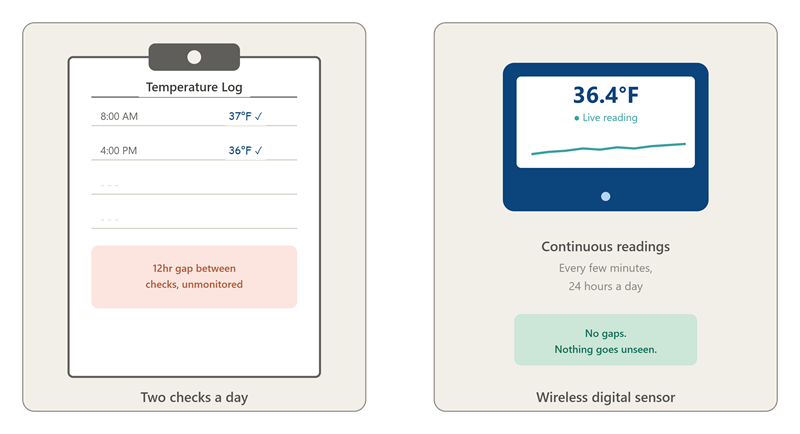
Comparison of a handwritten temperature log clipboard and a wireless digital temperature sensor

Replacing Manual Temperature Logs with Automated Monitoring: What Actually Changes

62% of US facility managers were still using spreadsheets or disconnected systems to track their operations as of 2026, and for temperature-sensitive spaces specifically, that often means someone walking a clipboard around twice a day, writing down a number, and hoping nothing goes wrong between readings. This is more common than most people outside facilities

Replacing Manual Temperature Logs with Automated Monitoring: What Actually Changes Read More »

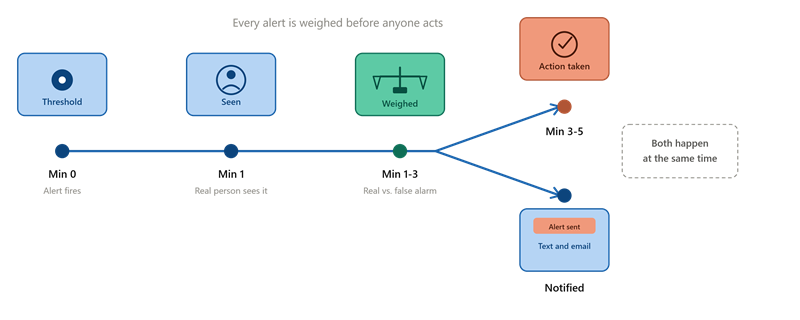
Timeline diagram showing the five-minute sequence from sensor alert to client notification

What Actually Happens in the First 5 Minutes After a Sensor Alert Fires

Most conversations about facility monitoring focus on the sensor and the alert itself, what triggers it, how sensitive the threshold is, how fast the notification arrives. Less attention goes to what actually happens in the minutes immediately after an alert fires, even though that window is usually what determines whether the situation stays minor or

What Actually Happens in the First 5 Minutes After a Sensor Alert Fires Read More »

Empty residential hallway with natural light, representing a vacant home monitored by wireless sensors

How a Property Management Company Cut Vacant Home Visits From Daily to Weekly

A property management company managing a portfolio of vacant homes had a straightforward but expensive problem: every empty property needed to be physically checked, regularly, to catch issues before they became disasters. A pipe freezing in an unheated basement in January. A door left unsecured after a contractor visit. A slow leak that goes unnoticed

How a Property Management Company Cut Vacant Home Visits From Daily to Weekly Read More »

Field service technician using a digital tablet to confirm a completed repair work order.

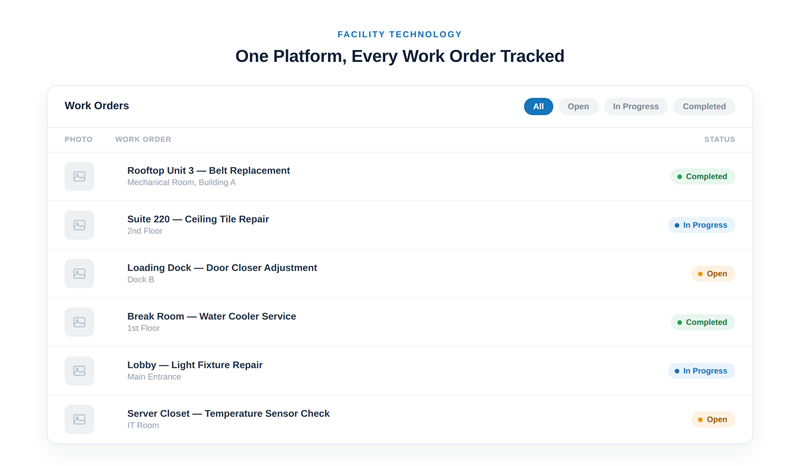
How Modern Work Order Tracking Gives Facility Managers Real Accountability

Where do facility repair requests go to die? Usually, in one of three places: an unread email thread, a sticky note on a desk, or a verbal conversation in a hallway. For facility managers trying to oversee multiple properties or large commercial spaces, managing repair requests manually is a constant headache. Tasks get forgotten, tenants

How Modern Work Order Tracking Gives Facility Managers Real Accountability Read More »