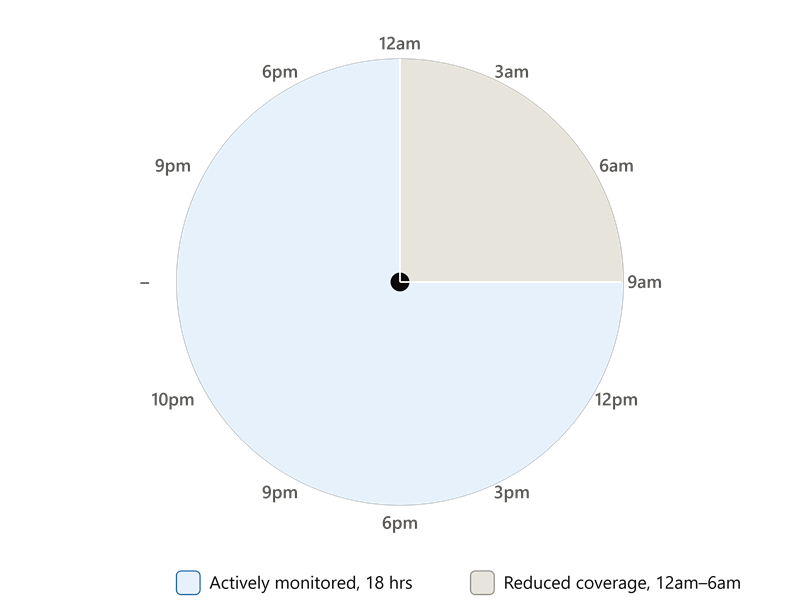

24-hour clock diagram showing a gap in coverage between fully monitored and unmonitored hours

Why “24/7 Monitoring” Doesn’t Mean What Most Facilities Assume It Means

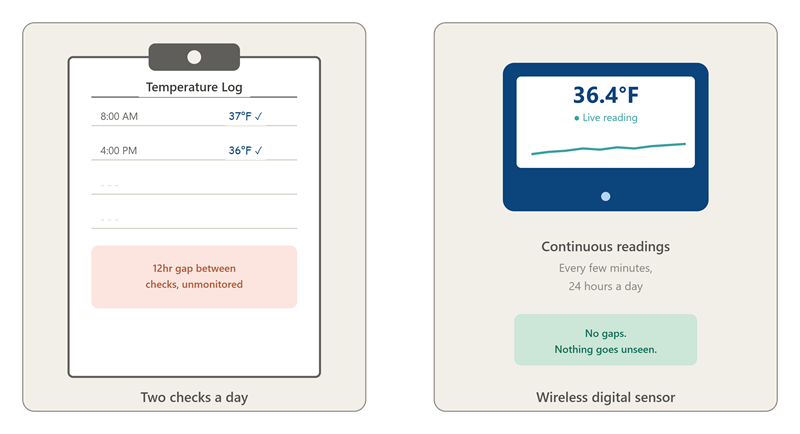
“24/7 monitoring” is one of the most common phrases in facility technology marketing, and one of the least precisely defined. It sounds like a complete promise, someone is always watching, all the time. In practice, the phrase covers a wide range of actual service levels, and the gap between what it implies and what it […]

Why “24/7 Monitoring” Doesn’t Mean What Most Facilities Assume It Means Read More »

Empty residential hallway with natural light, representing a vacant home monitored by wireless sensors

How a Property Management Company Cut Vacant Home Visits From Daily to Weekly

A property management company managing a portfolio of vacant homes had a straightforward but expensive problem: every empty property needed to be physically checked, regularly, to catch issues before they became disasters. A pipe freezing in an unheated basement in January. A door left unsecured after a contractor visit. A slow leak that goes unnoticed

How a Property Management Company Cut Vacant Home Visits From Daily to Weekly Read More »

Office entrance door.

Door & Hardware Upkeep: Protecting Building Security and ADA Compliance

Think about how many times an exterior entrance door or a shipping/receiving door or lobby entryway opens and closes during a single business day. Employees, tenants, delivery drivers, and visitors pass through constantly. Because commercial doors get heavy physical use, their internal hardware—hydraulic closers, hinges, panic bars, electronic latches, and weather stripping—wears out faster than

Door & Hardware Upkeep: Protecting Building Security and ADA Compliance Read More »

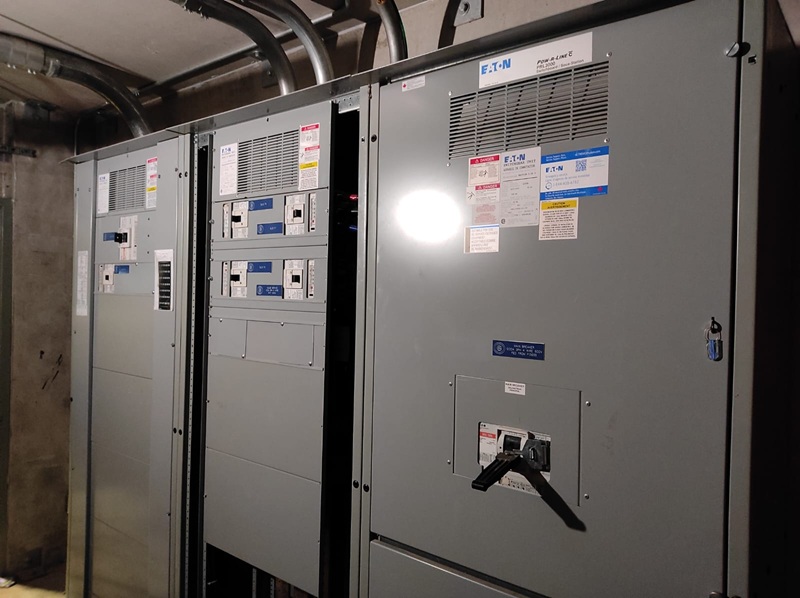
Commercial facility electrical room with labeled electrical distribution panels.

Preventing Circuit Overloads: A Guide to Commercial Electrical Maintenance

When electricity is working properly in a commercial building, nobody gives it a second thought. Lights turn on, computers stay powered, rooftop HVAC fans hum, and daily operations keep moving. However, electrical infrastructure rarely gives off obvious warning signs like a dripping water pipe or a squeaking belt. Issues often build up quietly inside breaker

Preventing Circuit Overloads: A Guide to Commercial Electrical Maintenance Read More »

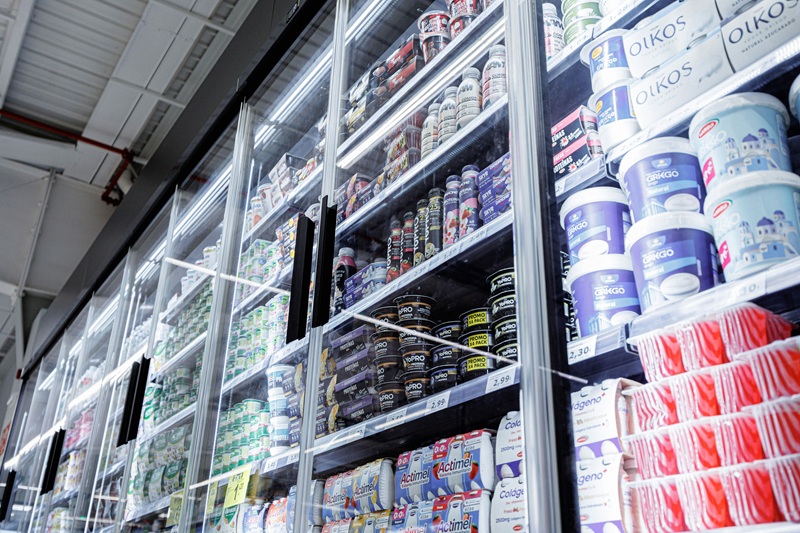
Food Storage Rack in a grocery store.

FSMA Compliance Temperature Monitoring: What Food Distributors Need to Know

For food distributors, commercial kitchens, cold storage warehouses, and grocery operations, food safety isn’t just an operational priority—it is a strict legal mandate. Under the FDA’s Food Safety Modernization Act (FSMA), businesses that transport, store, or process perishable food items must demonstrate strict, documented preventative controls against temperature excursions. Failing an FSMA audit or suffering

FSMA Compliance Temperature Monitoring: What Food Distributors Need to Know Read More »

Wireless HVAC vibration sensor installed on a commercial equipment.

How Wireless Power & Vibration Sensors Flag HVAC Failure Before It Happens

Commercial heating and air conditioning units rarely fail without warning. Long before a compressor seizes or an air handler motor burns out, the machine gives off early physical indicators that something is wrong. The motor starts vibrating slightly as bearings wear down. The electrical draw spikes as the system struggles against internal resistance. To the

How Wireless Power & Vibration Sensors Flag HVAC Failure Before It Happens Read More »

Property asset manager reviewing facility capital expenditure planning documents on a computer.

CapEx vs. OpEx: How Proactive Maintenance Protects Property Valuation

For commercial property owners and asset managers, maintaining a clear line between Capital Expenditures (CapEx) and Operating Expenses (OpEx) is vital for long-term financial health. The problem occurs when a lack of operational maintenance forces major equipment to fail years before its expected end-of-life. Suddenly, a planned operational expense turns into an emergency CapEx expenditure.

CapEx vs. OpEx: How Proactive Maintenance Protects Property Valuation Read More »

Commercial plumbing technician performing preventative valve maintenance in a building mechanical room.

How Routine Commercial Plumbing Audits Prevent Costly Water Main Failures

Water supply lines run silently behind the walls and beneath the floors of every commercial property. Because plumbing works without daily intervention, it is easy for property managers to take water infrastructure for granted—until a main supply line fails or a shutoff valve freezes shut during an emergency. Emergency plumbing calls aren’t just expensive; they

How Routine Commercial Plumbing Audits Prevent Costly Water Main Failures Read More »

Wireless temperature monitoring probe installed inside a commercial restaurant walk-in cooler.

Walk-In Cooler Monitoring: What Restaurants and Food Distributors Need to Know

For restaurants, grocery operators, and food distributors, walk-in coolers and freezers house your most valuable daily asset: your inventory. A single refrigeration failure over a holiday weekend or overnight can result in $5,000 to $15,000 in lost food, emergency repair fees, and lost health inspection points. Despite this massive financial risk, many food service businesses

Walk-In Cooler Monitoring: What Restaurants and Food Distributors Need to Know Read More »

Wireless water leak detection sensor placed near a commercial water heater base.

Water Leak Sensors for Commercial Buildings: Where to Place Them for Maximum Protection

Water damage is every property manager’s worst nightmare. Unlike a slow heating issue or a flickering light, an undetected water leak causes severe, immediate damage that compounds by the minute. A broken supply line over a weekend can flood elevator shafts, ruin server infrastructure, destroy ceiling tiles, and create mold hazards that cost tens of

Water Leak Sensors for Commercial Buildings: Where to Place Them for Maximum Protection Read More »

Field service technician using a digital tablet to confirm a completed repair work order.

How Modern Work Order Tracking Gives Facility Managers Real Accountability

Where do facility repair requests go to die? Usually, in one of three places: an unread email thread, a sticky note on a desk, or a verbal conversation in a hallway. For facility managers trying to oversee multiple properties or large commercial spaces, managing repair requests manually is a constant headache. Tasks get forgotten, tenants

How Modern Work Order Tracking Gives Facility Managers Real Accountability Read More »

Property manager reviewing organized facility operations schedules.

5 Signs Your Building Operations Are Running in Reactive Mode

Every facility manager wants to be proactive. We all prefer smoothly running equipment, predictable monthly costs, and satisfied tenants. But in the day-to-day chaos of managing commercial properties, it is dangerously easy to drift into reactive mode. Reactive mode means the tenant or the broken equipment dictates your daily schedule. You spend your morning answering

5 Signs Your Building Operations Are Running in Reactive Mode Read More »

Commercial HVAC technician performing preventative maintenance on a rooftop unit.

How Preventative Maintenance Contracts Actually Save Money on Commercial HVAC Systems

If you manage a commercial building, you already know the sinking feeling that comes with an emergency call from a tenant in mid-July: “The air conditioning on the third floor just went out.” Suddenly, you aren’t managing your day—you’re managing a crisis. You are paying emergency technician callout fees, waiting on hard-to-find replacement parts, and

How Preventative Maintenance Contracts Actually Save Money on Commercial HVAC Systems Read More »